
How to Mitigate Risk at Large-Scale Public Events: A Practical Guide for Organizers
Running a large-scale public event is one of the most logistically complex undertakings a corporate event organizer or marketing team will face. When thousands of people gather in one place, the margin for error shrinks fast. A single incident — a crowd crush, a vendor no-show, a sudden storm — can expose organizers to significant financial liability, reputational damage, and legal consequences that linger long after the event itself.
The good news: most of these risks are manageable. The key is approaching event risk mitigation systematically, starting well before the first ticket is sold.
Why Risk Mitigation Is Non-Negotiable at Large Public Events
At scale, the stakes across financial, legal, and reputational dimensions are too high to manage informally. A large public event without a structured risk management approach isn't just an operational gamble — it's a potential liability that venues, local authorities, and insurers will scrutinize closely.
Consider what's actually at risk. Public liability claims from attendee injuries can run into hundreds of thousands of pounds or more. Event cancellations due to weather or force majeure events can wipe out revenue and trigger contractual penalties with venues and sponsors. Vendor failures — a stage collapsing, a food supplier causing illness — can trigger multi-party litigation.
Beyond the financial exposure, reputational damage can be permanent. Corporate event producers who have experienced a high-profile incident know that recovery takes years, not months. Proactive risk mitigation isn't just about protecting one event; it's about protecting the business behind it.
Conducting a Comprehensive Event Risk Assessment
A thorough event risk assessment identifies every plausible hazard before it becomes an incident. This means systematically reviewing five core areas: venue and site conditions, expected crowd size and demographics, weather exposure, vendor and contractor activities, and the specific activities or programming involved.
Start with a site walkthrough with your venue operators. Look for structural risks, evacuation bottlenecks, areas with poor sightlines for security, and any infrastructure that requires specialist inspection. A venue that looks fine for 500 people may present entirely different hazards at 5,000.
Document everything. Risk assessments only carry weight — with insurers, local councils, and courts — when they're written down and dated. Your assessment should include:
- A hazard register with likelihood and severity ratings for each identified risk
- Specific mitigating controls assigned to named responsible parties
- Residual risk ratings after controls are applied
- Sign-off from relevant stakeholders, including venue management
Weather deserves its own section in any outdoor event assessment. Historical weather data for your location and time of year is freely available, and insurers will expect you to have considered it. Ignoring a known weather pattern isn't just operationally risky — it can affect your coverage.
Building a Risk Management Plan That Satisfies Insurers
A formal event risk management plan is both an operational document and an insurance document. What goes into it directly affects your insurability and, in many cases, your premium.
Insurers assessing a large public event want to see evidence that the organizer has thought systematically about what could go wrong and has put controls in place. A well-constructed plan signals lower risk, which translates to broader coverage and more competitive pricing. A thin or absent plan signals the opposite.
At minimum, a plan that satisfies most insurers should cover:
- Crowd management protocols — including maximum capacity, entry/exit flow, and stewarding ratios
- Emergency response planning, including evacuation procedures and medical provision
- Communication chains — who makes decisions during an incident and how information flows
- Third-party and vendor management procedures
- A named event safety officer or equivalent responsible person
One common mistake organizers make is treating the risk management plan as a box-ticking exercise. Insurers and loss adjusters can tell the difference between a plan that was genuinely implemented and one that was filed away. If a claim arises and the plan doesn't match the on-site reality, coverage disputes become much more likely.

Key Insurance Coverages Every Large-Scale Event Needs
No single policy covers everything, so large-scale events typically require a combination of coverages. Understanding what each does — and doesn't — cover is essential before you sign anything.
Public liability insurance is the foundation. It covers claims from third parties (attendees, bystanders, neighboring businesses) for bodily injury or property damage arising from your event. For large public events, limits of £5 million are common, though many venues and local authorities require £10 million or more. Check your venue contract — it will almost certainly specify a minimum.
Event cancellation coverage protects against financial losses when an event can't proceed due to circumstances outside your control. This includes force majeure events, extreme weather, venue unavailability, or the failure of a key performer or speaker. Policies vary significantly in what they include, so read the exclusions carefully.
If you're employing staff — including temporary event staff — employer's liability insurance is a legal requirement in the UK. Volunteer-heavy events should also check whether volunteers are covered under the same policy or require separate provision.
Finally, consider contingency or non-appearance coverage for headline acts or keynote speakers, and equipment insurance for staging, AV, and other high-value assets on site.
Managing Third-Party and Vendor Risk
Third-party vendors and contractors represent one of the most underestimated risk categories at large events. When a vendor causes an incident, the question of who bears liability can become complicated quickly — and organizers often find themselves exposed even when the fault lies elsewhere.
The most effective tool here is contractual risk transfer. Every vendor contract should include a clause requiring the vendor to carry their own public liability insurance and to indemnify the organizer against claims arising from their work. This doesn't eliminate all exposure, but it creates a clear legal pathway when something goes wrong.
Require a certificate of insurance (COI) from every vendor before they're permitted on site. A COI confirms that the vendor's policy is active, names the relevant limits, and — ideally — names your organization as an additional insured. Don't accept verbal assurances. If a vendor can't produce a COI, that's a red flag worth taking seriously.
Vet vendors beyond their paperwork. Check references, inspect equipment in advance where possible, and clarify who is responsible for setup, operation, and breakdown. Ambiguity in vendor agreements tends to become expensive ambiguity when claims arise.
Crowd Safety, Emergency Response, and On-Site Protocols
Crowd management and emergency response planning are where risk mitigation becomes operational. Good documentation means nothing if the on-site execution doesn't match it.
Crowd management protocols should be developed in consultation with venue operators and, for larger events, with local police and fire services. Key elements include:
- Defined capacity limits with entry control mechanisms to enforce them
- Clearly marked and staffed entry, exit, and emergency exit points
- Trained stewards at appropriate ratios (typically 1 per 250 attendees for general events, higher for higher-risk formats)
- Communication systems — radios, PA capability — that function independently of mobile networks
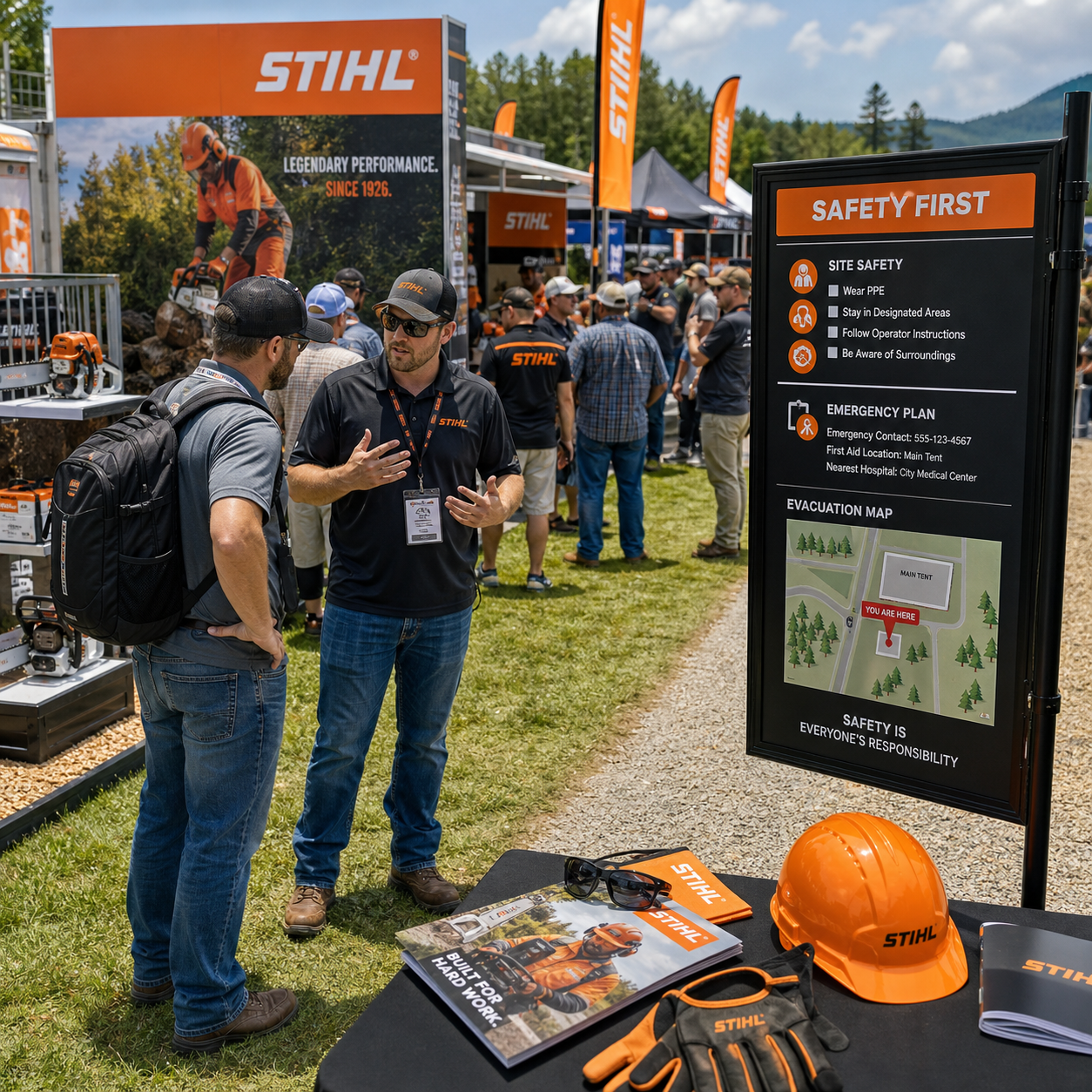
Medical provision is non-negotiable. At a minimum, large events should have qualified first aiders on site, a designated medical area, and a clear protocol for escalating to emergency services. The Health and Safety Executive's Event Safety guidance provides a useful framework for calibrating medical provision to crowd size and event type.
Run a pre-event briefing with all operational staff, security, and medical teams. Everyone should know the evacuation plan, the communication chain, and who has authority to make decisions during an incident. Incidents escalate fastest when no one is sure who's in charge.
Working With an Insurance Broker Specializing in Event Coverage
A specialist event insurance broker is a strategic partner, not just a policy seller. Engaging one early — ideally at the planning stage rather than weeks before the event — gives you access to expertise that can shape your risk management approach and your coverage simultaneously.
General commercial brokers can arrange basic coverage, but large-scale public events involve a combination of exposures that require specialist market knowledge. A broker who works regularly in the events sector will know which insurers have appetite for your event type, what documentation they'll require, and where standard policy wordings may leave gaps.
When you approach a broker, come prepared. The more information you can provide upfront, the more accurately they can place your risk. Useful documentation includes:
- Your completed event risk assessment and risk management plan
- Expected attendance figures and event format details
- Venue details and any existing venue insurance
- A list of vendors and contractors, with their COIs where available
- Previous event history, including any prior claims
Timing matters. For large or complex events, aim to have insurance discussions underway at least three to six months before the event date. Last-minute placements limit your options and often result in higher premiums or narrower coverage.
Frequently Asked Questions
What is the minimum public liability insurance required for a large public event?
There is no universal legal minimum, but most venues and local authorities require at least £5 million in public liability coverage for large events. Many specify £10 million or more. Always check your venue contract and any licensing conditions, as these will set the floor for your coverage requirements.
Does event cancellation insurance cover weather-related disruptions?
It depends on the policy. Many event cancellation policies include adverse weather as a covered peril, but coverage is typically triggered by conditions that make the event genuinely impossible or unsafe to proceed — not simply inconvenient. Read the policy wording carefully and discuss specific weather scenarios with your broker before binding coverage.
Who is responsible if a third-party vendor causes an incident at my event?
Liability can attach to the vendor, the organizer, or both, depending on the circumstances and the contractual arrangements in place. Well-drafted vendor contracts with indemnity clauses and COI requirements significantly reduce organizer exposure, but don't eliminate it entirely. Your own public liability policy may also respond, subject to its terms.
How far in advance should I arrange event insurance?
For large-scale events, start conversations with a specialist broker three to six months out. Some coverages — particularly event cancellation — may need to be in place before certain costs are committed, so earlier is generally better. Waiting until the final weeks limits your options and can leave gaps.
What happens if my risk management plan is deemed inadequate by an insurer?
Insurers may decline to offer coverage, apply significant exclusions, or require specific improvements before binding a policy. In a claims scenario, an inadequate or unimplemented risk management plan can give insurers grounds to dispute or reduce a payout. Treat your plan as a live document, not a filing exercise.