

Insurance Considerations for Virtual vs. In-Person Corporate Events
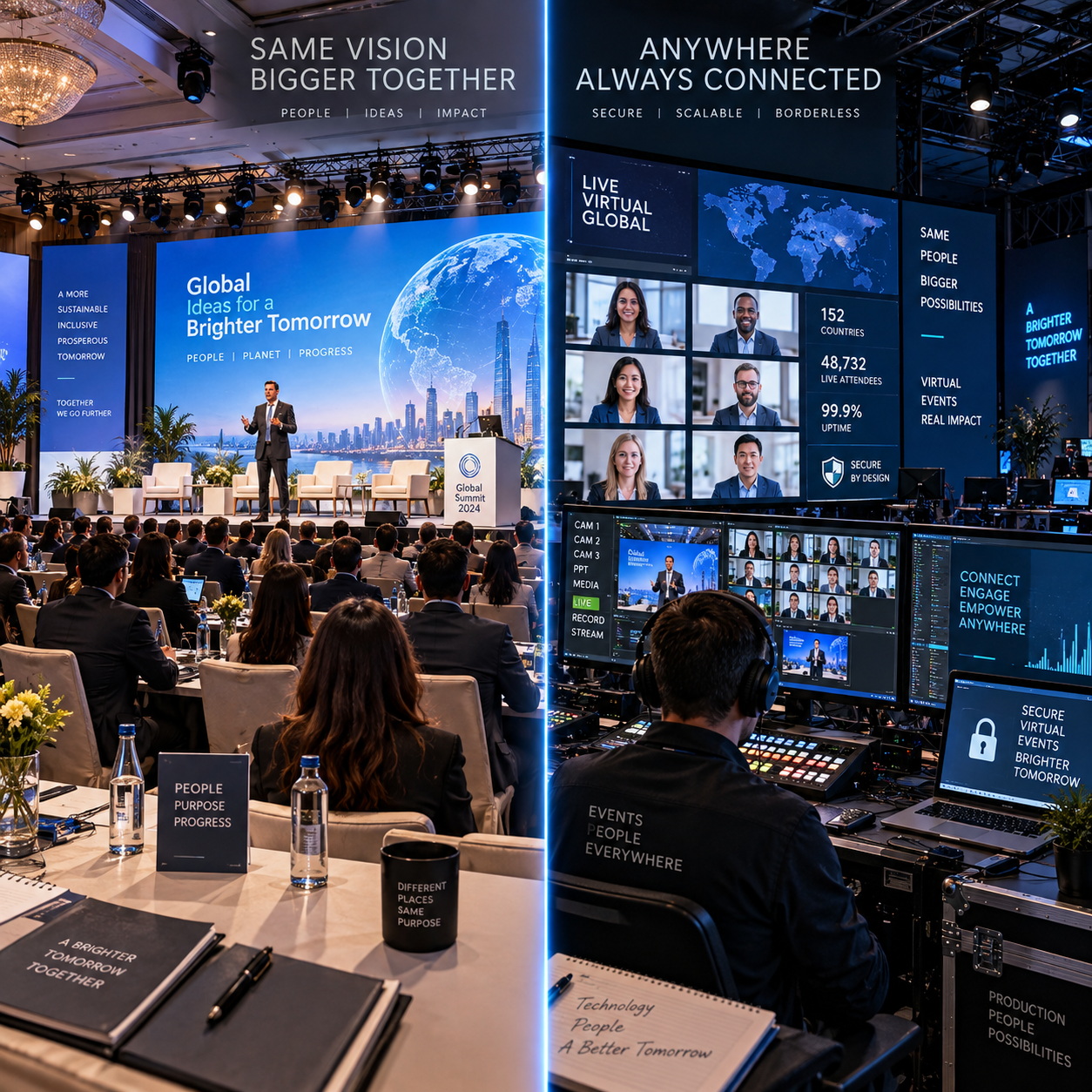
Corporate event insurance should reflect how an event actually operates. An in-person conference may expose an organization to bodily injury, property damage, venue claims, and attendee safety incidents, while a virtual event can create greater exposure to cyberattacks, privacy breaches, platform outages, and technology failures.
The right approach is to map the event’s activities, contracts, people, locations, and technology before selecting coverage. Policy terms vary by insurer, jurisdiction, event design, and organization, so planners should review existing policies with a qualified insurance broker, insurer, or legal adviser.
Why Event Format Changes Insurance Needs
Event format changes insurance needs because physical gatherings transfer risk toward people, property, and premises, while virtual programs transfer more risk toward technology, data, and digital access. Hybrid events can combine both exposure profiles.
An in-person event may involve a rented venue, hundreds of attendees, temporary structures, catering, alcohol service, transportation, staging, and third-party vendors. A virtual event may depend on a streaming platform, registration database, cloud services, presenters’ devices, recorded content, and remote employees or contractors in multiple locations.
Geography also matters. A single-site meeting may have a concentrated risk, whereas a virtual corporate event can reach participants across states or countries. That wider reach may affect privacy obligations, contractual requirements, employment practices, and the response to an incident.
Start with a simple risk map:
- People: attendees, employees, speakers, contractors, and vendors.
- Places: venues, offices, temporary event sites, and remote work locations.
- Property: displays, laptops, cameras, sound systems, rented equipment, and event materials.
- Platforms: registration tools, video services, streaming systems, payment providers, and cloud storage.
- Promises: contracts covering cancellation, performance, privacy, security, indemnification, and service levels.
Insurance Considerations for In-Person Corporate Events
In-person corporate events commonly require attention to general liability, venue insurance requirements, property and equipment coverage, vendor contracts, alcohol-related exposures, and attendee safety. The exact coverage depends on the venue, activities, attendance, and jurisdiction.
Premises, bodily injury, and property damage
Event liability insurance may respond to claims alleging bodily injury or property damage connected with the event. Examples include a guest slipping on a wet floor, a display damaging the venue, or a temporary installation falling and injuring someone. General liability coverage may address some of these claims, subject to policy language, exclusions, limits, and deductibles.
Venues frequently request a certificate of insurance and may require the organizer to name the venue as an additional insured. A certificate confirms that a policy exists; it does not change the policy or guarantee that a claim will be covered. Confirm the required limits, dates, location, additional-insured wording, and waiver-of-subrogation provisions before signing the contract.
Equipment, vendors, and alcohol
Property and equipment coverage may be relevant for rented audiovisual systems, lighting, computers, exhibits, signage, and production gear. Check whether coverage applies while equipment is being transported, installed, stored, or used at the event site.
Third-party vendors should carry insurance appropriate to their work. Caterers, security companies, transportation providers, entertainers, staging firms, and production companies may create different exposures. Request certificates of insurance, review their limits, and confirm that contracts clearly assign responsibility for injuries, property damage, and negligence.
Alcohol service can create additional liability concerns. A venue, caterer, or licensed service provider may need its own applicable coverage. Do not assume the organizer’s general liability policy automatically covers every alcohol-related claim; ask specifically about host liquor or other relevant provisions.
Insurance Considerations for Virtual Corporate Events
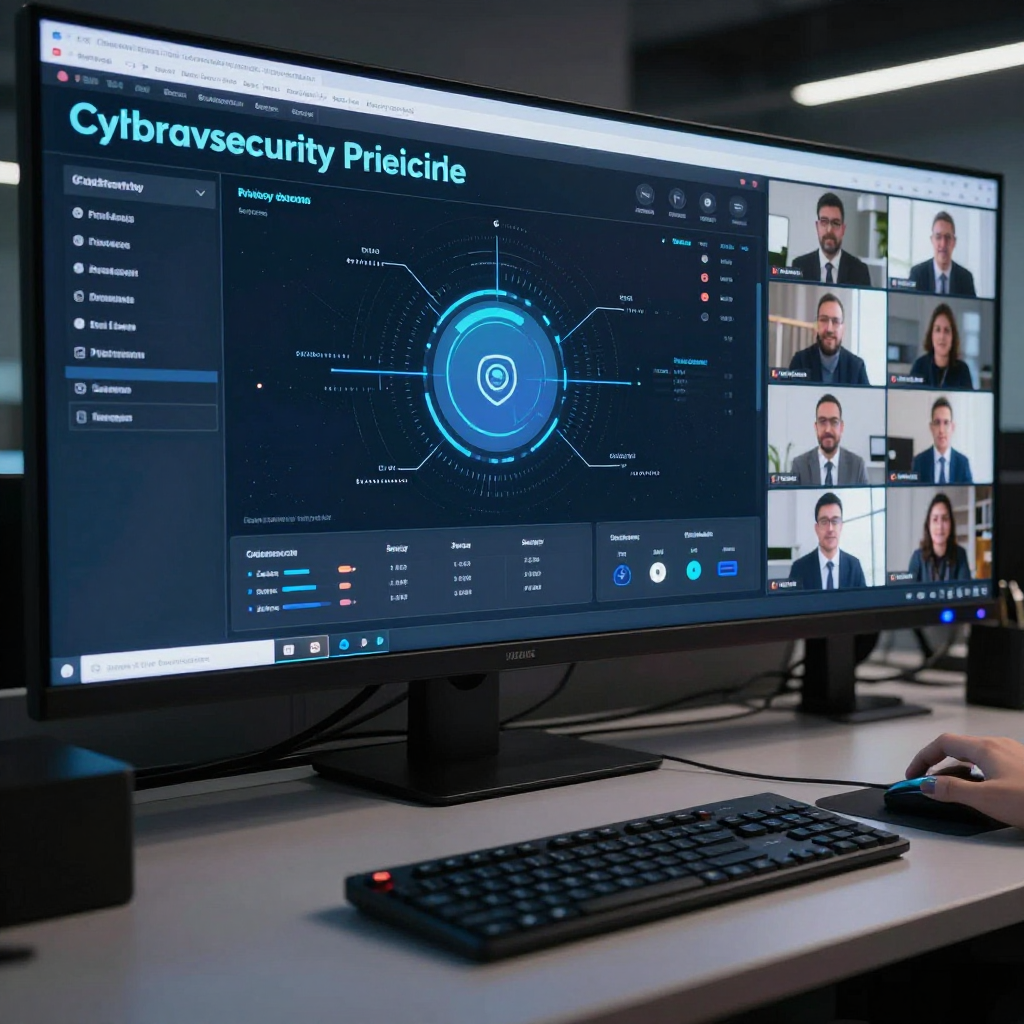
Virtual event insurance focuses on cyber incidents, data privacy, platform outages, unauthorized access, intellectual property, and technology-related disruption. General liability alone may not address the financial consequences of a compromised registration system or failed streaming platform.
Cybersecurity and privacy
A virtual event may collect names, email addresses, job titles, payment details, attendance data, recordings, or questions submitted by participants. A cyber incident could involve phishing, credential theft, ransomware, unauthorized recording, malware, or disclosure of personal information.
Cyber liability insurance may cover selected first-party and third-party costs, such as breach response, forensic investigation, notification, legal services, regulatory inquiries, or claims by affected individuals. Coverage varies considerably. Ask whether the policy addresses vendors, cloud platforms, social engineering, ransomware, international participants, and privacy obligations in the relevant jurisdictions.
Organizations should also apply practical controls: multifactor authentication, limited administrator access, strong passwords, tested backups, secure registration forms, encrypted transmission where appropriate, and a documented incident-response plan. Insurance supports risk management; it does not replace it.
Technology failures and professional services
Technology errors and omissions insurance may be relevant when an organization or vendor provides technology-enabled services and a failure causes financial loss. For example, a production company could misconfigure access controls, lose a recording, or fail to deliver a contracted broadcast service.
Platform outages are more complicated. A standard event cancellation policy may exclude or narrowly define technology failure. Review whether the policy covers an outage caused by the platform, internet service provider, cyberattack, power failure, or human error. The platform’s service agreement may limit its liability, leaving the organizer responsible for participant communications and replacement costs.
Coverage That May Apply to Both Event Types
Both virtual and in-person corporate events may need event cancellation insurance, general liability coverage, vendor protections, business interruption analysis, workers’ compensation, and support from organization-wide insurance policies.
Event cancellation insurance may reimburse certain nonrecoverable expenses or lost revenue when a covered cause prevents, postpones, or interrupts an event. Covered causes and exclusions differ. Weather, venue damage, communicable disease, terrorism, nonappearance, civil authority orders, and technology failure may be treated differently, or excluded entirely.
Review the policy’s definition of cancellation, postponement, abandonment, and interruption. Ask whether it covers deposits, speaker fees, advertising, venue charges, replacement costs, and additional expenses required to reschedule. A cancellation policy may protect the event budget, but it does not necessarily cover reputational harm or every contractual penalty.
- General liability: may address third-party bodily injury and property damage, depending on the claim.
- Cyber liability: may address data privacy and cybersecurity incidents connected with digital event operations.
- Property coverage: may apply to owned, leased, or rented equipment and materials.
- Workers’ compensation: generally relates to eligible employee injuries arising from work, subject to applicable law and policy terms.
- Business interruption: may respond to qualifying operational income loss after a covered event, but it is not automatically event cancellation insurance.
Check organization-wide policies before buying separate event coverage. Existing commercial general liability, cyber, property, workers’ compensation, and business interruption policies may provide protection, but limits, sublimits, exclusions, and territorial restrictions can make the available coverage narrower than expected.
Comparing Key Risks: Virtual vs. In-Person
The main difference is the dominant source of loss: in-person events emphasize physical injury, premises, and equipment, while virtual events emphasize cyber, technology, privacy, and access failures. Neither format is automatically lower risk.
| Risk area | In-person event | Virtual event |
|---|---|---|
| Primary liability | Attendee injury, venue damage, food service, and temporary structures | Privacy claims, unauthorized access, content issues, and service failures |
| Property | Staging, exhibits, rented audiovisual equipment, and event materials | Laptops, cameras, recordings, digital assets, and cloud-stored data |
| Technology | Production failure can disrupt presentations and broadcasting | Platform outage, bandwidth failure, account compromise, or software error |
| Third parties | Venue, caterer, security firm, transportation provider, and production company | Platform provider, registration service, streaming vendor, speaker, and cloud provider |
| Cancellation | Venue damage, severe weather, nonappearance, or public authority action | Platform outage, cyber incident, unavailable speaker, or service interruption |
A hybrid event requires a combined review. For example, a venue claim and a streaming failure could occur during the same program. Allocate responsibility in contracts rather than assuming one policy or vendor will handle the entire loss.
How to Evaluate Coverage Before the Event
To evaluate event coverage, identify the loss scenarios first, then compare policy limits, exclusions, deductibles, covered locations, third parties, triggers, and documentation requirements. Ask for answers in writing.
- What policy responds to bodily injury, property damage, cyber incidents, privacy breaches, and technology errors?
- Are virtual attendees, speakers, contractors, venues, and vendors treated as insureds, third parties, or excluded parties?
- What are the per-occurrence, aggregate, cyber, equipment, and cancellation limits?
- Does coverage apply to every event location, remote worker, country, or participant jurisdiction?
- Which causes of cancellation or postponement are covered, and which are excluded?
- Are platform outages, internet failures, cyberattacks, power loss, human error, or vendor insolvency covered?
- Does the policy cover additional expenses to move an in-person event online or replace a failed virtual platform?
- What notification deadlines, consent requirements, security controls, and incident-reporting procedures apply?
- Which vendors must provide their own insurance, and what certificates or endorsements are required?
- Does the venue require additional-insured status, primary and noncontributory wording, or specific limits?
Also read indemnification clauses, limitation-of-liability provisions, data-processing terms, force-majeure language, and service-level commitments. A vendor contract can shift responsibility even when an insurance policy appears broad.
Practical Insurance Checklist for Corporate Event Planners
A practical corporate event insurance checklist should begin during planning, continue through contracting and verification, and end with documented incident follow-up. Early review gives the broker and vendors time to resolve gaps.
During initial planning
- Define the format: in-person, virtual, or hybrid.
- List attendees, employees, speakers, contractors, locations, countries, activities, and estimated costs.
- Inventory owned, rented, leased, and borrowed equipment.
- Review existing general liability, cyber, property, workers’ compensation, and business interruption policies.
- Identify likely cancellation, postponement, cyber, privacy, and vendor-failure scenarios.
When contracting
- Review venue insurance requirements and indemnification language.
- Require appropriate insurance from third-party vendors, including caterers, production companies, platforms, and security providers.
- Confirm who controls attendee data, recordings, credentials, and incident notifications.
- Examine cancellation terms, deposits, refund obligations, force-majeure clauses, and technology service commitments.
Before and during the event
- Collect and verify certificates of insurance and required endorsements.
- Confirm policy dates, locations, limits, deductibles, and named parties.
- Test access controls, backups, communication channels, emergency procedures, and platform contingencies.
- Document injuries, property damage, outages, unauthorized access, complaints, and vendor communications promptly.
After the event
- Report potential claims within the policy’s required timeframe, even if the final loss is unknown.
- Preserve contracts, invoices, photographs, access logs, recordings, correspondence, and incident reports.
- Hold a post-event review and update the organization’s risk register for future programs.
Frequently Asked Questions
Do virtual corporate events need liability insurance?
Yes, a virtual corporate event may need liability insurance, particularly cyber liability, technology errors and omissions, privacy, and general organizational coverage. The appropriate combination depends on the data collected, services provided, vendors used, and existing policies.
What insurance does a venue typically require for an in-person event?
A venue commonly requests evidence of general liability insurance and may require specified limits, additional-insured status, or other contractual wording. Requirements vary by venue and jurisdiction, so obtain them before committing to the location.
Does event cancellation insurance cover a platform outage?
Not automatically. Platform outage coverage depends on the policy’s covered causes, definitions, exclusions, and endorsements. Ask specifically about technology failure, vendor interruption, internet outages, cyber incidents, and additional costs to reschedule or change platforms.
Are third-party vendors covered under the organizer’s policy?
Usually, vendors are not automatically covered as though they were the organizer. Their contracts and insurance policies should be reviewed separately, and the organizer may need certificates or additional-insured endorsements where appropriate.
When should corporate event insurance be arranged?
Begin the insurance review as soon as the event format, venue, budget, and major vendors are known. Cancellation coverage may have time-sensitive conditions, while certificates and endorsements can take several business days or longer to arrange.
Insurance planning works best when it follows the event’s real operating model. Match coverage to physical activity, digital infrastructure, contractual duties, and the people who may suffer a loss, then have qualified advisers confirm whether the policy wording supports that assessment.